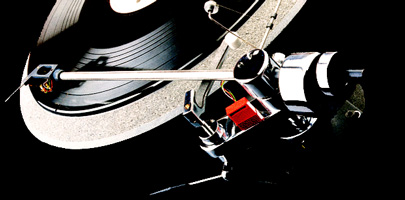
Hadcock
We no longer
stock or can get arms or spare parts. January 2017
The late George
Hadcock designed and made tone arms for more than 30 years. The
Unipivot design, regarded by many vinyl aficionados as the best
sounding of all arm types, was Georges' specialty.
With his son Charles now in control a new sense of purpose has
been found in the range of tonearms, and a new ISO quality
control system is in place, ensuring that every hand made arm
meets the exacting standards that has not always been there. So
think again and consider the unipivot Hadcock and you will not
be disappointed by what you get. superb build quality, and a
sonic image that has beguiled audiophiles for more than 3
decades, and for very good reason.
The range we offer
encompasses a sensible price range, giving the listener the
option of ever increasing quality. Alterations are based upon
arm tube length, either 228.6, or 243.8mm and type of internal
and external wiring. Ranging from simple copper, through
Incognito, to Van Den Hul silver cable.
The new Hadcock with the choice of pure copper cable such as the
Hadcock 242 Export, has been awarded the HiFi World Award as
best tonearm 2004.
A full range of accessories and spare parts are available
allowing the user the opportunity to fix the arms to all types
of decks. from Garrard, Origin Live, Project, Rega and Roxan,
through to SME, Avid, Thorens and Technics to name but a few.
|
 |
|
__________________________
We no longer
stock or can get arms or spare parts. January 2017
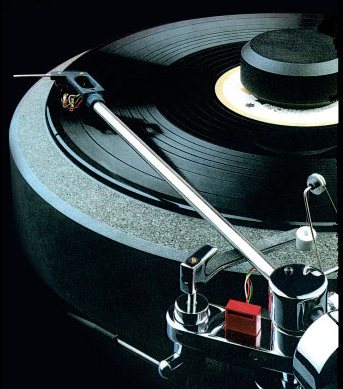
The Hadcock GH228
pick up arm, is an excellent upgrade for most ready
supplied arms in today’s mid price turntables. The two
arm types offered the 228 and the 242 range share the
same mounting body. The difference comes in the arm tube
length and headshell. The GH 228 model now just comes
with pure copper wiring internally and externally. The
arm uses the same Stainless Steel arm tube and headshell
as the 242 but is slightly shorter and due to their
Unipivot design are light weight tone arms.
The GH 228 Export is the only remaining arm in the 228
range and uses a pure OFC internal wire, fly leads and
Copper interconnects. All 228 arm tubes are
interchangeable, and the spare headshells allow for easy
interchanging of cartridges. Giving the listener the
choice of saving that expensive treasured cartridge for
special listening sessions, whilst the old favourite can
be employed at other times. Set up of the arms is a
little harder than a fixed pivot arm, however,
comprehensive easy to follow instructions are included
with every arm, and the quality of workmanship and
finish make it a pleasure to assembly and fine tune.
Once a unipivot is fixed and aligned, it will require
minimal maintenance if any at all. The GH 228 is
suitable for almost all turntables including SME,
Thorens, Michell, Nottingham Analogue, Avid, Technics,
Linn and Origin Live to name but a few. |
|
__________________________
We no longer
stock or can get arms or spare parts. January 2017
The Hadcock GH242
Export
is the starter arm in the 242 range, using pure Oxygen
Free Copper this opens up the world of the vinyl user to
the benefits of a Unipivot, all at an affordable price.
Winner of Hi Fi World Best Tonearm Award 2004.
The GH 242 Export Cryo uses DCT internal wiring
and DCT fly leads, and uses a special GH OFC
Interconnect to connect arm with preamp, reviews coming
soon in HiFi World and TNT Audio, but suffice to say
this is now the biggest selling Hadcock arm and for very
good reason.
The GH 242 Integra formerly the GH 242SE, was our
biggest seller until the Cryo family came along. The
Integra uses the famous Incognito (Cardas) wiring
throughout, offering a stunning
sonic performance from the legendary cabling.
The all new GH 242 Cryo offers the very best of
the cable options, extensively tested after true Deep
Cryogenic treatment, enhancing cable structure offering
a better signal path. George then with his listening
panel tried different cable combinations. This was
judged the best of them all. The Cryo will not
disappoint, and is the ultimate Hadcock 242 in our
opinion.
The GH 242 Super Silver our final arm in the 242
range is the is only available to special order.
This is the ultimate arm offered by Hadcock. It utilises
Van Den Hul internal silver wiring and fly leads, and a
special Super Silver phono cable specially manufactured
by The Cartridge Man.
All 242 arm tubes are interchangeable, and the spare
headshells allow for easy interchanging of cartridges.
Giving the listener the choice of saving that expensive
treasured cartridge for special listening sessions,
whilst the old favourite can be employed at other times.
Set up of the Hadcock tone arms is a little harder than
a fixed pivot arm, however, comprehensive easy to follow
instructions are now available on this site and will be
included with all new arms. The quality of workmanship
and finish make it a pleasure to assembly and fine tune.
Once a unipivot is fixed and aligned. it will require
minimal maintenance if any at all. The GH 242 is
suitable for almost all turntables including Technics,
Avid, SME, Thorens, Michell, Nottingham Analogue, Linn
and Origin Live to name but a few.
__________________________
|
__________________________
Hadcock Reviews
Hadcock GH242 SE Tonearm by Roy Gregory
Hi-Fi+, Issue 13 - Sep / Oct 2001
"If it ain't broke, don't fix it" is an aphorism that could be
applied a little more diligently to the world of hi-fi, along
with that other perennial chestnut, "There's nothing new under
the sun". As an industry we seem to forget more than we ever
learn about the art of making music in the home, and more often
than not, each new miracle cure or product turns out to be some
old, established idea or technology simply recycled and rebadged.
Of course some of them never went away, they just shrank a
little (or in some cases a lot) from the glare of the
fashionable spotlight. The Hadcock arms are a classic example.
Long declared dead and laid to rest in their UK home market,
they have, nonetheless, soldiered happily along overseas. But
what goes around comes around (never let it be said that I
crossed the road to avoid a cliche) and the Hadcock is back,
selling again in its native Isles.
Of course, whether or not you considered it "broke" in the first
place depends on your point of view. Alongside SME, the Hadcock
tonearms used to be amongst the most successful on the UK
market. However, the advent of the LP12, and more importantly
the Grace G707 and Linn Ittok arms saw a sea change in favour of
gimbal bearings for use on the nervous suspended decks that
rapidly became de riguer. Uni-pivots, for such were the Hadcocks,
craved rather more stability than they got from a lightweight
three-point suspended sub-chassis, and their performance
suffered accordingly. Sensibly they emigrated to Germany and
Japan, where high-mass decks still held sway (or rather didn't,
if you get my drift). Even a brief and probably ill-advised
flirtation with fixed bearings in the GH220 couldn't stop the
rot, and Hadcock all but disappeared from view. But fashion is
nothing if not predictable, and yo these many years later,
high-mass turntables and unipivot arms are back in vogue, even
if the current incumbents do borrow wholesale from the
archaeological store chest of hi-fi's history. The Hadcock GH242
is an exception to that rule; it is hi-fi history. If you don't
believe me just take a look on page 95 of Hi-Fi Choice number
24. There you'll see the GH228 Export, a 9" dead-ringer for the
10" 242 I've got in front of me. Oh, there are differences. The
242 uses a stainless steel armtube rather than the aluminum
alloy one on the 228, which also accounts for the change from
black to the current chrome finish. This also increases the
effective mass slightly, making the arm happier with today's
lower compliance cartridges. However, the bearing and the
mechanical structure of the arm are, to all intents and
purposes, identical, so I guess that's where we should start.
Ah yes, the performance. The GH242 had the unenviable task of
stepping into the shoes vacated by my VPI JMW 12.5, as 12"
unipivot that costs about three times the price of the Hadcock.
Under the circumstances, it handled a potentially difficult
situation with aplomb, offering a different but equally valid
view of musical events. Score one for the underdog.
The Hadcock was happiest with the Music Maker, a combination
that made the most of the cartridge's tonal and organic
qualities, creating a potent cocktail with the 242's dynamic
life and transparency. Together they are capable of challenging
(and occasionally embarrassing) the musical virtues of many a
highly touted and extortionately priced combination. Deeply
unfashionable (a moving-iron cartridge in an unashamedly dated
tonearm) they more than make up in performance what they like in
audiophile credibility. Many a vaunted arm has struggled to
decipher Neil Young's Sleeps With Angels . The Hadcock might
skate over some of the more excessive bass abuse, but the
diction ands separation of the vocals is never in question.
Midrange is where the music is, and it's what the 242 excels at.
It used to be difficult to recommend a sensible and cost
effective upgrade from Rega. Not anymore. On the right deck and
loaded with the right cartridge the Hadcock offers performance
and musical integrity way beyond its price. Not as pretty as a
Morch or as solid as an SME 309, it outperforms either when it
comes to delivering the essence of a musical performance. They
say you can't teach old dogs new tricks. On the evidence of the
GH242, perhaps you don't need to.
HiFi World
Hadcock GH242 SE Tonearm
Put The Right Arm In, by Richard White
Richard White sticks his arm out to hail the latest unipivot
offering from G.C. Hadcock, the GH242 SE.
Unipivot arms have, as the name implies, one universal pivot
which permits the arm to rock about the bearing in any
direction. it's an attractive arrangement in many ways: for a
start, it's simple; second, provided that the bearing is
properly designed and made, friction can be minimized to
exceptionally low figures. Lastly, the set-up is inherently
self-balancing - there is no tendency for gravity, acting
through a fixed-axis pivot point, to push the arm across the
record in either direction.
All this care in design and manufacture need not, of course,
produce a listenable result. How does it sound ? Properly
speaking, it doesn't. For an arm which will happily carry rather
stiff MCs right the way to exceedingly compliant (30c.u.+)
variable reluctant types, the Hadcock 242's modesty is
startling. Having tried it out with an extensive variety of
cartridges, from a £30 MM Stanton to a £1700 MC van den Hul, all
I can report is that, if the Hadcock is adding any coloration,
the result is only an improvement. As regards its tracking
ability, the new geometry is spot on, with the inner zero error
point coinciding with the 'worst' groove on most LP records - a
very happy result.
The Hadcock's price is roughly comparable with the Rega 900 and
the SME 300 range and, in my opinion, it is both more versatile
and more able than either. In truth its performance places it in
a higher class altogether. All-in-all, whether you view it as a
bargain high-ender or as an improbably musical medium-pricer,
the GH242SE deserves a long blissful listen.
Top marks from HiFi World
Hadcock GH242 SE Tonearm
by Edward Barker sixmoons.com
The images produced were beautifully stable, poised and
attentive. The Hadcock turned out to be far less temperamental
than the Moerch UP4 I lived with and loved, but sported the same
gorgeous midrange. At the same time, bass was considerably more
present and well defined. The Moerch, with its S-shaped arm wand
and lowered counterweight was less happy tracking warped records
and probably wasn't as good a tracker in the first place. The
242SE's take is altogether more assured. Like the Moerch, the
Hadcock presents an ever so subtle lifting of the leading edges.
Could that be due to the stainless-steel arm wands they both
have in common? It gave Boccherini's "La Musica Notturna delle
Strade di Madrid" (that's "The Night Music of the Streets of
Madrid") on Die Röhre - The Tube [Tacet L74] a delightful
vibrancy at the expense of what I perceive to be "neutrality".
But on this record, the Hadcock also produced something close to
the levels of deep jet blackness the Schroder achieves. When the
violins are nail-plucked, the ticking sounds were full of the
harmonic structure standing out from the silence. The
inter-relationship between melody and countermelody was
beautifully rendered, rhythms well caught and delineated.
Instruments appeared well separated and with a good
three-dimensional harmonic envelope. Boccherini's resolute bass
motif came forward with full weight and scale. Time to smile,
and smile big.
I evaluated the Hadcock with several cartridges, from the
Allaerts MC1S to the Music Maker 2 (an unusually brilliant
match), from a Scheu-modded Benz Glider to a high-compliance Van
den Hul Empire MC1000. The arm easily distinguished the sonic
character of each one. If it imparted a sonic character of its
own, I would place it as giving forth a sense of purposeful
energy, but one that has not lost poise and control. The slight
lift of leading edges remained apparent with all cartridges.
TNT-Audio
Hadcock GH242 Pure Silver Tonearm
by Geoff Husband - TNT France TNT-Audio, Dec 2002
In my last review I described the Morsiani unipivot as the most
musical arm I'd heard, dodging many Hi-Fi attributes for a
unique ease and flow. The Hadcock goes completely the other way,
taking on gimballed arms such as the SME4 and Artemiz
head-to-head. With the Music Maker on board the result is that
the information retrieval is astonishing. Here is a unipivot
that will drag every ounce of detail from your records, it seeks
out leading edges so making it incredibly fast - it seems
bursting with energy, only the Artemiz comes close.
The Hadcock 242 Silver is not cheap. In fact it costs much the
same as an SME4. Where the '4' looks a million dollars, the
Hadcock looks a little eccentric. But on the Michell Orbe at
least, the 242 Silver is a clear winner on sound quality. The
Morsiani I preferred to the SME as well, but in that case it was
hard to judge as it was so different, all I can say was it made
me want to play more music. The Hadcock on the other hand was an
easy comparison because it simply did what the SME did - better.
That the thing is simple to set up, should last forever and is
rather different from the rest of the herd is just the icing on
the cake.
And now my system has a new "reference" for others to beat. The
Hadcock with either the Music Maker or the XX-2 cleans up the
bottom end of the Orbe and just makes music so much fun, so that
the SME has to take third place. That my two favourite arms are
unipivots is significant, I'm not saying that a unipivot is a
guarantee of quality (I didn't much like the Kuzma), but those
"flat earthers" that have been banging on about them for the
last 20 years obviously have something going for them.
__________________________
We no longer
stock or can get arms or spare parts. January 2017

|