|
 Tonearms and
Turntables
Tonearms and
Turntables

SME; the home of
arguably the finest precision gramophone pick-up arms and
turntables in the world.
To own an SME product is to possess a jewel of near perfection
in both performance and construction...
SME has over 60
years experience in high quality precision engineering.
The Company's plant at Steyning is probably the largest and best
equipped for the manufacture of precision pick-up arms and
turntables in the World.
Buying a SME
Turntable is a lifetimes investment. SME will service it
forever. Fads come and go, SME are rock solid, it may be
expensive, but you only need buy once. As our MD's
Grandmother used to say "quality is cheap" we think she
meant you only buy once and live happily ever after!
We know more
about SME than a lot of others, and all of SME's options are
available to all our customers. We can order specials,
just ask us? Why buy from us? well this page has the best
description of SME products, links to most reviews and Our
guide prices, all in one place. Sound Hi Fi are SME
experts. We can deliver by hand to your home, a completely
set up working SME system of your choice.

M2 Tone arm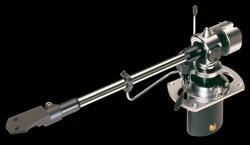
We often wonder why people spend so much time and money
modifying other arms, when for the same "end price" you can get
the real McCoy!!
The Series M2
embraces three models the M2-9, M2-10 and M2-12 offering
pivot-stylus dimensions covering virtually all turntable
requirements.
These arms offer at reasonable cost, meticulous build quality
with all the most important features including lightweight
stainless steel tonearm, detachable magnesium headshell with
azimuth adjustment, tungsten balance weight, superb quality ball
race bearings etc., and a level of stiffness and rigidity to
suit all types of cartridge.
These precision pick-up arms embody well tried SME principles
and are suited to a broad range of cartridges including those of
medium and low compliance.
Series M2-9 is the standard arm having a pivot-stylus dimension
of 233.2 mm (9.18”) and will therefore be the one most
frequently used. Typical effective mass 9.5 grams.
Series M2-10 is identical except that the pivot-stylus dimension
is 239.3 mm (9.42”) a difference that suits the layout of some
decks. Typical effective mass 9.6 grams.
Series M2-12 has a pivot-stylus dimension of 308.8 mm (12.16”).
Distortion caused by lateral tracking error is at least 25% less
than possible with a nine inch arm. However effective mass will
be typically 12.0 grams. Also, a turntable designed for 12-inch
arms must be selected.
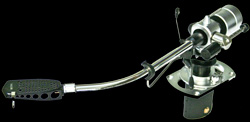
Both the SME M2-9R
and SME M2-12R are S shaped with the classic SME headshell
connector. These really are lovely !
The internally damped tonearm of highly polished stainless steel
provides sparkling uncoloured reproduction. A unique single
element balance system caters for cartridges weighing 5 to 12
grams. After balancing tracking force is applied by forward
movement of the weight ensuring the lowest system inertia. The
weight moves on a precision screw thread with backlash
eliminator allowing exact setting of vertical tracking force.
The M2 shell is pressure die-cast in magnesium for lightness and
rigidity. A collet of ingenious design affords ‘one-piece’
rigidity and allows azimuth correction to be made before final
tightening.
A fluid damper FD-M2 is an optional accessory. The normal slow
passage of the arm across the record is unaffected but
influences which would tend to produce over-rapid motion are
resisted by the flow characteristic of the fluid. It’s use is
recommended with very low compliance cartridges or where there
is a problem with external vibration such as a springing floor.
• 1.0 gram per revolution tungsten weight sub-graduated 0.25
moving on a precision screw with backlash eliminator
• 1220mm (48”) D501 balanced audio lead.
• Engineered in the best
camera quality with satin chrome finish
• Fluid damped lift/lower control
• Geometry optimised for Ø300mm (12”) LPs
• Low friction, fully shielded races for both axes
• Phono plugs and other contacts heavily gold plated
• Pressure die-cast magnesium headshell with unique collet
• Sliding base for tracking adjustment
• Thin-walled stainless steel tonearm with internal damping
• Thumbwheel height adjustment
• Traditional pattern anti-skate
• Uses industry standard RCA to RCA (phono to phono)
interconnect
 M2-9R Review from HiFi World (ignore the price!)
●
We will beat any other price, just ask us!
M2-9 Our price Ask ?
M2-10 Our price Ask ?
M2-12 Our price Ask ?
M2-9R Our price Ask ?
M2-12R Our price Ask ?
Ground cable only, super flex silicon sleeve £4.96 (£5.95 including EU value added
sales tax (VAT))
Timestep RCA-RCA cable including ground cable £29.17
(£35.00 including EU value added
sales tax (VAT))
SME Cable Ask ?
Spare headshell for above Ask ?
300
Tone arm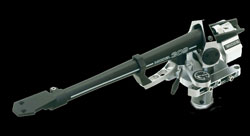
The Series 300 broadens the application of SME technology.
Although the unique one-piece magnesium tone-arm is used for the
Series 300 Model 309, advanced metal techniques produce a
fabricated arm of exceptional stiffness for the Series 300 Model
310 and 312 arms thus allowing a choice of three arm lengths to
suit all decks.
The detachable magnesium headshell has a new style coupling,
providing the convenience of rapid cartridge interchange without
loss of rigidity. Our designers can be justly proud of these
models which offer a performance and manufacturing excellence
unmatched by many more expensive models.
• Unique pressure die-cast magnesium shell detachable and
interchangeable without disturbing cartridge or wiring.
• New design clamping arrangement ensures rigid junction with
tone-arm.
• Internal constrained layer damps minute residual vibrations
making tone-arm acoustically inert.
• Stainless steel cross shaft, ground and thread ground. Carried
in massive yoke on 10mm precision ball races. Axis at record
mean level to minimise warp-wow.
• Unique assembly gives high rigidity and allows bearings to be
critically adjusted before tone-arm is fitted.
• Stainless steel vertical shaft, ground and thread ground, with
integral 16mm diameter flange to couple shaft and yoke.
23mm diameter steel pillar, heat treated, ground & honed, two
17mm precision ball races, widely spaced to resist tilt.
• Anti-skate control operates through tension spring and
filament. Dial corresponds with VTF and has positive OFF
position.
• Lowering/raising control gives smooth positive action. Height
of lift can be adjusted.
• Dual-lock base provides movement control with high rigidity.
• Tungsten-alloy balance weight carried on damped two-point
suspension.
• Extra-low inertia design assists warp riding.
• Underslung weight housing corrects centre of gravity and
provides non reflective tone-arm termination.
• Swivelling, damped output socket minimises vibration
transmission in sub-chassis use.
• Reference lines on tone-arm facilitate VTA setting.
• Fine adjustment of horizontal tracking angle (HTA).
• New design alignment protractor sets HTA with great accuracy.
• Cartridge leads and internal wiring LCOFC litz.
• Balanced LCOFC audio lead with gold plated phono plugs.
Review from The Gramophone
Review from Hi Fi
+
●
We will beat any other price, just ask us!
309, tapered magnesium arm tube Our price Ask ?
309 GD, Black, gold details, Our price Ask ?
310, Our price Ask ?
312S, tapered magnesium arm tube, all black, gold details,
and damper kit, upgraded internal wiring,
Our price Ask ?
Timestep SME-RCA cable including ground cable a £41.63 (£49.95 including EU value added
sales tax (VAT))
SME Cable Ask ?
Spare headshell for above Ask ?
IV
Tone arm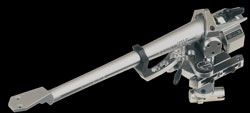
The Series IV precision pick-up arm owes much to the technology
developed for the acclaimed Series V. Although presented at a
lower price it retains the unique one-piece magnesium tone-arm,
dual-lock base and other advanced features listed. The Series IV
is a worthy relative of 'the best pick-up arm in the world' with
a sonic performance reflecting the care and attention to detail
underlying its design and manufacture.
• Unique one-piece pressure die-cast tone-arm utilising the
advantages of magnesium, replaces conventional fabricated
construction.
• Internal constrained layer damps minute residual vibration
leaving the tone-arm acoustically inert.
• Fine machined cartridge platform, enamel free to avoid
interface resonance.
• Stainless steel cross shaft, ground and thread ground. Carried
in massive yoke on 10mm ABEC 3 ball races. Axis at record mean
level to minimise warp-wow.
• Unique assembly gives high rigidity and allows bearings to be
critically adjusted before tone-arm is fitted.
• Stainless steel vertical shaft, ground and thread ground, with
integral 16mm diameter flange to couple shaft and yoke.
23mm diameter steel pillar, heat treated, ground & honed,
carries two 17mm ABEC 7 ball races, widely spaced to resist
tilt.
• Anti-skate control operates through tension spring and
filarnent. Dial corresponds with VTF and has positive OFF
position.
• Lowering/raising control gives smooth positive action. Height
of lift can be adjusted.
• Dual-lock base provides movement control with high rigidity.
• Tungsten-alloy balance weight carried on damped two-point
suspension.
• Extra-low inertia design assists warp riding.
• Under slung weight housing corrects centre of gravity and
provides non-reflective tone-arm termination. Adjustment lead
screw journalled in twin ball races with lever clamping.
• Swivelling damped output socket minimises vibration
transmission in sub-chassis use.
• Reference lines on tone-arm facilitate VTA setting.
• Fine adjustment of horizontal tracking angle (HTA)
• New design alignment protractor sets HTA with great accuracy.
Review from The Gramophone
●
We will beat any other price, just ask us!
IV, Our price Ask ?
IV-D, Detachable Our price Ask ?
Timestep SME-RCA cable including ground cable a £41.63
(£49.95 including EU value added
sales tax (VAT))
SME Cable Ask ?
Spare headshell for above Ask ?
V
Tone arm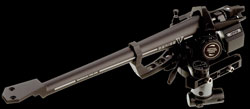
Regarded by many,
us included, as the finest tonearm in production. And in
reality, is isn't really that expensive to buy the best, you
only have to do it once!
SME engineers, recognising the potential of the latest
complementary equipment, accepted the challenge to design and
build a pick-up arm which unlike others in existence would make
no detectable sound contribution of its own. The work took
almost four years and the measure of its success is the
acceptance of the Series V precision pick-up arm by technical
experts and users as one of the world's truly great audio
products. Series V sound has an almost startling dynamic range
and neutrality enabling high levels to be enjoyed. It escapes
the 'LP' sound and demonstrates that structural resonances in
pick-up arms are responsible for much that makes vinyl records
readily discernible from master tapes.
The functioning of a pick-up arm appears simple but is in fact
very complex. All cartridges employ relative motion between
armature and stator portions of a generating system to produce
the signal output. Reproduction can only be true therefore when
all movement representing groove modulation is made by the
armature to which the stylus cantilever is attached and none by
the stator represented by the cartridge body. Unless the pick-up
arm holds the latter against even the minutest movement at audio
frequencies the signal will be modified in some way. The result
is a subtle loss of clarity, dynamic range and transient attack
that can make the sound from even the best system tiring to
listen to.
The following notes will help a better understanding of the
problems and how they were resolved in this radically new
design.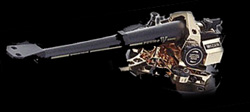
In common with any mechanical device the behaviour of a pick-up
arm is governed by three properties of matter that also define
the laws of motion. The first property is mass which opposes any
change in motion. The effective mass of an arm and cartridge
resists motion least at low frequencies but increasingly as
frequency rises. It is this resisting force which makes the
operation of a cartridge possible. At subsonic frequencies the
armature and stator move as one allowing the slow movements
needed to negotiate the record surface without generating a
signal. At audio frequencies however the increased resisting
force causes the armature to move relative to the stator and a
signal is produced. The transition point between these two
conditions is important for a clean low frequency response and
is established by the compliance of the cartridge and the total
effective mass of the arm and cartridge body. The second
property is stiffness which resists bending or flexing. It is a
restoring force, proportional to position or deflection.
The third property is damping or resistance to motion. Here
motion means velocity and without it there is no damping. The
total equation of force acting on a pick-up arm is therefore the
sum of three parts: acceleration acting on the mass, velocity
acting on the internal or applied damping, and bending or
deflection acting on the stiffness.
Mass and stiffness determine how much a pick-up arm will flex
and vibrate and damping determines how long it will vibrate.
Damping alone cannot prevent flexing or vibration, it can only
lessen its effect. The stiffer the arm the less it will flex and
vibrate; the more massive the less it will vibrate.
Very high tone arm mass would therefore be ideal to control the
cartridge had it not to be strictly limited to preserve the
required relationship of compliance and mass already referred
to. Stiffness, the second part of the equation of force, must
therefore be used also. Infinite stiffness would be ideal but we
have to be more realistic. In a beam of given length stiffness
is dependent on the material used, its cross-sectional area and
in the case of a cylindrical beam increases as the cube of its
diameter. Doubling the diameter will make it eight times as
stiff. Although the proportions of the Series V tone-arm reflect
these facts, tests showed that the required stiffness was still
unattainable using conventional fabricated construction. A
one-piece die-casting in magnesium alloy was therefore adopted
comprising the shell, tube and balance weight cantilever. 36%
lighter but only 25% less stiff than commonly used aluminium, a
magnesium arm of the same mass could be as much as 25% stiffer.
In addition die-casting would allow the numerous changes of
section required to optimise effective mass and control standing
wave effects. Finally magnesium's high self-damping factor was
augmented with an internal constrained layer to damp the tubes’
high frequency resonance.
The Series V's excellent vibration analysis results owe much to
the high stiffness and damping of its tone-arm, but stiffness to
be of value must refer to something rigid. Tests disclosed the
many points at which rigidity could be lost so all other
principal parts were pressure die-cast allowing each to be
tailored precisely for its purpose and utilising the high mass
of zinc-based alloy to damp out vibration. Ultra-high quality
10mm and 17mm ABEC 7 radial shielded bearings were selected to
provide low friction vertical and lateral movements, while
holding the tone-arm motionless against front/back and torsional
forces. The support afforded by these large, wide contact angle
bearings, excludes the possibility of chatter and wear or damage
in normal use. The horizontal axis bearings carry the tone-arm
in a substantial yoke also housing a spring tracking force
mechanism. The bearing axis is at record mean level to minimise
warp-wow effect and the spring, a possible source of coloration,
is resonance controlled. The main pillar is 23mm diameter,
machined from steel, heat treated, ground and honed. It houses
the vertical shaft and bearings, and carries the control bracket
incorporating the anti-skate mechanism, lowering/raising control
and motion damper.
The base is highly original. The pillar moves vertically between
two jaws and horizontally between two slideways. Locking is
effected by transverse clamp bolts, spring loaded to maintain
settings when released. The design ensures extremely positive
clamping maintaining the rigidity of the assembly which is then
secured to the mounting surface of the deck with four cap-head
screws. The weight housing is undersung to correct its centre of
gravity and provide a vibrationally non-reflective termination
of the tone-arm. A damped two-point suspension carries the
tungsten-alloy balance weight . Its unique shape enables it to
be positioned close to the fulcrum reducing inertia to minimise
the effects of record warp and eccentricity. Movement is
made along mitre-ways by rotating a thumb wheel and lead screw
carried in twin ball races. Only l9mm of travel is required to
cover the whole balance range and a lever effects clamping in
any position.
Electrical aspects received no less attention. The internal
wiring is of specially developed silver litz, each conductor
having five insulated strands. The damped output-socket swivels
allowing it to take up its own position for installation and to
minimise vibration transmission when used on a sub-chassis. The
high quality linear crystal oxygen-free copper audio lead
selected for its electrical and mechanical characteristics is
terminated at one end with SME right-angle 5-pole DIN
contra-plug and gold-plated phono plugs at the other. The
magnesium tone-arm is finished in satin black enamel, other
major parts in black chrome with details in bright chrome and
polished stainless steel. Each unit is complete with tools,
accessories, and an advanced drill jig/template and alignment
system simplifying mounting and exact placing.
Structurally inert the Series V embodies every worthwhile
feature in a pick-up arm. As part of a complete system working
in concert with a comparable turntable and cartridge it will
provide wide range transparent reproduction of vinyl L.P's,
bringing the listener audibly closer to the clarity and dynamics
of the original performance.
• Unique one-piece
pressure die-cast tone-arm utilising the advantages of
magnesium, replace conventional fabricated construction.
• Internal constrained layer damps minute residual vibration
leaving the tone-arm acoustically inert.
• Fine machined cartridge platform, enamel free to avoid
interface resonance.
• A Stainless steel cross shaft, ground and thread ground.
Carried in massive yoke on 10mm ABEC 7 ball races. Axis at
record mean level to minimise warp-wow.
• Dynamic balance graduated vertical tracking force (VTF)
control applies 0-3g x 0.125g through resonance controlled
spring.
• Unique assembly gives high rigidity and allows bearings to be
critically adjusted before tone-arm is fitted.
• Stainless steel vertical shaft, ground and thread ground, with
integral 16mm diameter flange to couple shaft and yoke.
23mm diameter steel pillar, heat treated, ground and honed, two
17mm ABEC 7 ball races, widely spaced to resist tilt.
• Anti-skate control operates through tension spring and
filament. Dial corresponds with VTF and has positive OFF
position.
• Lowering/raising control gives smooth positive action. Height
of lift can be adjusted.
• Subsonic lateral mode fluid damper can be instantly adjusted
or cancelled.
• Dual-lock base provides movement control with high rigidity.
• Tungsten-alloy balance weight carried on damped two-point
suspension. Extra-low inertia design assists warp riding.
• Underslung weight housing corrects centre of gravity and
provides non-reflective tone-arm termination.
• Adjustment leadscrew journalled in twin ball races with lever clamping.
• Swivelling damped output socket minimises vibration
transmission in sub-chassis use.
• Fine adjustment of arm height (VTA).
• Reference lines on tone-arm facilitate VTA setting.
• Fine adjustment of horizontal tracking angle (HTA).
• New design alignment protractor sets HTA with greater
accuracy.
• Advanced jig/template system guarantees correct positioning.
Review from Hi Fi News
●
We will beat any other price, just ask us!
V, Our price Ask ?
V-D, detachable Our price Ask ?
V-P, gold print Our price Ask ?
V-G, gold plated Our price Ask ?
V, 12" Our price Ask ?
V, 12" Gold plated Ask ?
Timestep SME-RCA cable including ground cable a £41.63
(£49.95 including EU value added
sales tax (VAT))
SME Cable Ask ?
Spare headshell for above Ask ?
|
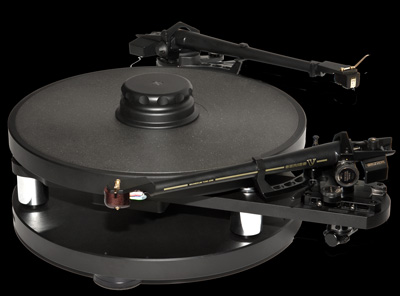
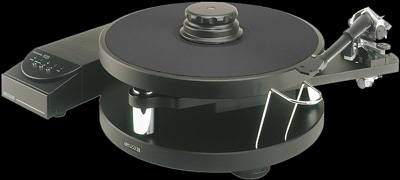
Model 10
Turntable & Dual Arm
This entry level turntable has a lot going for it, quite
simply it will out perform others of a similar price,
you can have it fitted with a V arm if you desire. The
SME Model 10 precision turntable is built to exacting
engineering standards providing reliability and freedom
from critical adjustments. Build integrity,
sophisticated electronics and vibration free moving
parts allow the full capabilities on any sound system to
be fully explored.
• The Model 10 weighs more than 15kg (33lb) but is only
Ø304mm, thus meeting all the requirements of high
density construction on which freedom from colouration
depends.
• The turntable is supported on three large polymer
isolators within adjustable feet allowing quick and easy
levelling.
• A cruciform sub-chassis carried on three polymer
loaded towers. A novel design which affords impressive
isolation without float.
• Fully machined extensionally damped platter, diamond
turned top surface with a fine scroll finish for optimal
record interface.
• Large diameter reflex record clamp ensures largest
possible platter/record contact.
• Speed range rpm: 33 1/3 (27/40), 45
(40/50) and 78 (60/100). (variable)
• Polished stainless steel stylus guard.
• Soft dust cover to accommodate the turntable and arm,
when not in use.
• Dimensions: 370 x 250 x 161mm (Record clamp fitted).
• Net weight with power supply: 16kg (38lb).
• Substantial packing case with internal fitments: 745 x
405 x 240mm
• Shipping weight: 18.25kg (55lb)
|
 |
 |
M10-DP Dual Arm
SME 10 mounting plate. For serious collectors and
music lovers, a dedicated mono cartridge is now becoming almost
a necessity, such is the improvement in mono playback with a
correctly designed mono cartridge. Which in turn gives rise to
the need for either a dual arm turntable or a second turntable
and arm altogether. Fortunately, owners of the SME Model 10
precision turntable can now benefit from the former without
having to splash out on the latter.
The SME Model 10 turntable is built to exacting engineering
standards and Timestep’s M10-DP dual tonearm mounting plate is
perfectly matched to it. The plate is manufactured from the same
material and to the same thickness and profile as SME’s primary
arm mounting plate, and is carefully designed not to affect the
turntable suspension.
Click here for more details.
Review from Hi Fi World
Review from Hi Fi Choice
Review from Hi Fi News
Review from Stereophile
Review from Tone Audio on the Dual Arm plate
●
We will beat any other price, just ask us!
10, Our price Ask ?
10 B, Our price Ask ?
M10-DP Dual arm plate £166.00
(199.00
including EU value added sales tax (VAT))
Model 15 Turntable
Receiving its
inspiration from the superb Model 10 precision turntable the
Model 15 seeks to emulate the excellence of our Models 20/3/&
30/2 turntable whilst retaining the more compact footprint
preferred by many of our enthusiasts.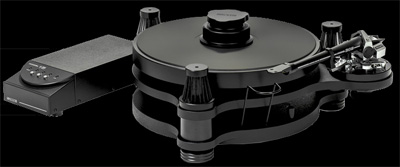
• The Model 15 has been designed with the same attention to
detail combined with simplicity of operation that has come to be
expected from all SME products. Its superb performance together
with laid back styling make it a glamorous addition to your
sound system that will astound and amaze listeners for many
years to come.
• The model 15 sub-chassis is suspended on thirty purpose
moulded 'O' rings and weighs, together with the platter, more
than 11.0Kgs (24 Ib), thereby meeting the requirement of high
density construction on which freedom from colouration depend.
• Suspension is adjustable through trimming screws in each
column and is used in conjunction with a gauge to give
recommended settings or varied to suit individual requirements.
• The suspension is further disciplined by a central fluid
damper which controls the sub-chassis motion, offers a resistive
ground path for acoustic signals, eliminates overshoot and gives
almost zero 'Q' recovery.
• The platter is machined from aluminium alloy and weighs over
4.6kg (10 Lb). It is extensionally damped, the top surface being
diamond-turned with a fine scroll. This method of finishing
upsets a myriad of tiny fibres which interface with the
underside of the record.
• A substantial clamp operating on the reflex principle ensures
the largest possible platter contact even appreciable record
warp is present.
• The main spindle is 19mm (3/4") machined from high chrome tool
steel, ground super finished and supported in a sealed housing
with individually fitted sintered bronze bearings of generous
proportions needed to support the platter.
• The Model 15 motor conforms to the higest standards of silent
running in a turntable.
• The turntable is driven by a 3-phase, brushless outrunner
inductance motor with 8-pole Neodymium magnets and 3 integrated
Hall position sensors. The electronic motor controller uses a
high performance microprocessor, optimised for motor control.
Closed loop speed control is implemented using a proportional
plus (PI) algorithm. Fine pitch speed adjustment allows
increments/decrements of +/- 0.01% of the selected speed. Speed
ranges: 33.3, 45 & 78 RPM.
Review from Hi Fi News
Our price Model 15
Ask ?
Our price Model 15A with SME 309 tonearm Ask ?
Model 20/3 -
20/12 Turntable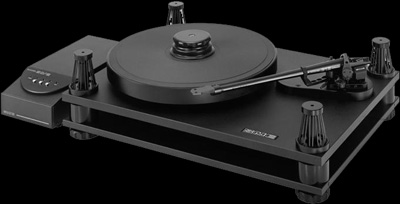
This finely engineered precision turntable offers a new
listening experience from your treasured vinyl and 78''s.
Massive construction, extensional damping of major surfaces and
lack of vibration from moving parts ensure tightly controlled
detailed sound and stable stereo imaging. Equipped with the
acclaimed Series V ''the best pick-up arm in the world''.
In an electro-mechanical record replay system a major problem is
extraneous vibration. This will come from numerous sources
including air and structure borne vibrations from loudspeakers,
vibrations caused by groove modulation and those set up by stray
electrical fields and mechanical imperfections in the
turntable's moving parts. Addressing these problems two simple
but important facts influence design. The higher the mass and
stiffness of a body the less it will flex and vibrate; the
duration of a vibration can be shortened by suitable damping.
Model 20/3 weighs approximately 28.6Kg (63lb), significant in
relation to its size because it is density that matters. For
example, the same weight of metal spread over a large enough
area would be aluminium foil! The sub-chassis measures only
440mm (17 5/16”) by 350mm (13 ¾”) but weighs 11Kg (24lb). Its
thickness 16mm (5/8”) resists flexing at low frequencies whilst
high frequency resonance is attenuated by efficient extensional
damping. The method of suspending the
sub-chassis is particularly important. In conventional
turntables metal springs often contribute significantly to
colouration. Sometimes even their size and nature can be
identified by experienced ear!
The Model 20/3''s suspension has no sonic footprint. It suspends
the sub-chassis on 32 purpose moulded ''O''-rings. The method of
anchorage allows the rings to be removed or replaced in a matter
of moments. Vertical and lateral movements of the suspension are
controlled by a large fluid damper. Sub-chassis decoupling is
sufficient to prevent acoustic feedback. Beyond this a degree of
coupling is considered necessary, allowing unwanted acoustic
energy to be drained away, being partly converted into heat as
it passes through the damping fluid before final dissipation in
the mass of the base and its supporting structure.
When playing a record two sets of mirror image audio vibrations
are reacted, one in the arm and the other in the platter and
both will pass into the sub-chassis in the course of
dissipation. The usual ''closed loop'' construction does not
address the problem of their differing phase however so in the
Model 20/3 the interfaces of the mounting plinth and bearing
assembly with the sub-chassis have received special attention to
provide individual paths of the required impedance.
The design aims of the Model 20/3 can be summarised thus:
Elimination of extraneous vibration effects. Orderly control of
unwanted signal vibrations. Pitch stability. Freedom from
radiated fields. Freedom from critical adjustments and setting
up procedures. Long term dependability. An all embracing list?
Certainly one to which careful attention should remedy most
turntable ills!
Dimensions: 440 x 350 x 172mm.
Packing: Substantial case.
Net weight with power supply: 31Kg (68lb)
Shipping weight approximately: 45Kg (100lb)
•Four point suspension for stability.
•Sub-chassis suspended on sixty-four strands of rubber in the
form of thirty-two purpose moulded ''O'' rings.
•Trimming screws for suspension adjustment.
•Central fluid damper controls sub-chassis motion a offers
resistive ground-path for acoustic signals.
•Two screws lock down the sub~chassis and seal the damper for
transport.
•19mm diameter main spindle machined from high/chrome steel
hardened, ground and super finished.
•Screw down record clamping system minimises record resonance.
•6.5kg machined platter with unique lsodamp face.
•Generous use of extensional damping and resistive loop
construction ensure sonic neutrality.
•Adjustable ball feet with optional compliant inserts.
•Four jacking screws built into the sub-platter allow the thrust
bearing to be off loaded for transit.
•Electronically commutated 3-phase, high-torque motor. Special
design virtually eliminates cogging.
•Large diameter strobe disc supplied allows precise adjustment
of standard speeds.
•Speed range (rpm): 33 1/3 = 27/40, 45 = 40/50 and 78 = 60/100.
•Fully shielded in-line control unit. LEDs indicate the main
functions.
•Power consumption - 9 watts.
20/3
Review from Hi Fi News
20/12
Review from Hi Fi News (previous model)
20/12
Review from Hi Fi Choice (previous model)
20/12
Review from The Absolute Sound (previous model)
20/2
Review from Hi Fi Choice (previous model)
20/2
Review from The Absolute Sound (previous model)
20/3, Our price (less arm) Ask ?
20/3A with SME 309 arm and SME cable Ask ?
20/3A with Gold writing V arm and SME cable Our price Ask ?
20/12, 12 inch less arm Our price Ask ?
 20/12A 12 inch including 312S arm Our price
Ask ?
20/12A 12 inch including 312S arm Our price
Ask ?
Model 30/2
Turntable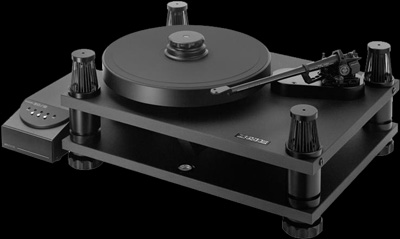
The best turntable and arm combination in the World, it's that
simple! If you can afford it, then you should buy it.
Height adjustable on
With its many original design features the Model 30/2 is a
unique turntable. There are no critical adjustments or setting
up procedures. Its immaculate construction and finish stem from
facilities and uncompromising quality control which have made
SME a byword for engineering excellence. Judged by Germany’s
AUDIO 'the best turntable of all time' the Model 30/2 can be for
the fortunate owner of an analogue collection the key to lasting
musical enjoyment.
SME have built pick-up arms for more than thirty-five years and
the design and engineering experience gained has been applied in
the Model 30/2, a precision turntable created to compliment the
SME Series V regarded by many as: 'the best pick-up arm in the
world'. In common with this arm the design of the Model
30/2 takes special account of sonic considerations and with
equipment of comparable quality can provide a listening
experience that allows L.P. sound to be re-assessed. Detail,
resolution, and neutrality are of a new order with a dynamic
range that does justice to the original sound.
The laws of physics decree that the higher the mass and
stiffness of a body the less it will flex and vibrate - and this
is reflected throughout the Model 30/2. The sub-chassis is
machined from 19mm thick aluminium alloy plate and weighs
approximately 17kg while the base with its four supporting
pillars adds a further 16kg. This offers the high mass and
stiffness required for uncoloured reproduction further aided by
efficient extensional damping of both components to reduce the
amplitude and duration of their vibrational modes.
In conventional turntables metal supporting springs often
contribute significantly to colouration. Sometimes even their
size and nature can be identified by an experienced ear! The
unique suspension system of the Model 30/2, however has no sonic
footprint, it hangs the sub-chassis on ninety-six strands of
rubber in the form of forty-eight purpose moulded 'O' rings. An
ingenious method of anchorage allows them to be removed or
replaced instantly, should this ever be necessary, even while a
record is playing!
• Stable four point
suspension.
• Sub-chassis suspended on eighty strands of rubber in the form
of forty purpose moulded ‘O’-rings.
• Trimming screws for suspension adjustment.
• Central fluid damper controls sub-chassis motion and offers
resistive ground-path for acoustic signals.
• For transport lock down screws secure the sub-chassis and seal
the damper.
• 19mm diameter main spindle machined from high-chrome steel
hardened, ground and super finished in a sealed oil bath.
• Reflex clamping system minimises record resonance.
• 6.5Kg (14.3lb) machined platter with unique Isodamp face.
• Generous use of extensional damping and resistive loop
construction ensure sonic neutrality.
• Adjustable ball feet with optional compliant inserts.
• Four jacking screws built into the sub-platter allow the
thrust bearing to be off loaded for transit.
• Driven by a 3-phase, 6 pulse, inductance motor, with 8 pole
Neodymium magnets and 3 integrated Hall position sensors.
• The power supply houses an electronic controller using a high
performance microcomputer, optimised for motor control. • Closed
loop speed control is implemented using a pseudo sine wave
commutation sequence and a proportional-plus-integral (PI)
algorithm.
• New design incorporates a 4 layer surface mount technology pcb
with on-board user adjustable speed variation control.
• Large diameter strobe disc supplied allows precise adjustment
of standard speeds.
• Speed range rpm: 33 1/3 (27/40), 45 (40/50)
and 78 (60/100). (variable)
Review from The Absolute Sound
Review from Stereophile
30/2 less arm, Our price Ask ?
30/2A with Gold writing V arm and SME cable, Our price Ask ?
30/12 less arm, Our price Ask ?
30/12 with Gold finish V 12 arm and SME cable Our
price Ask ?
30/12a with Gold plated V 12" arm and SME cable, Our price
Ask ?
NOTE : we can have parts of the turntable Gold or chrome plated,
ask for prices.
Parts
We have access to the whole range of SME and their parts.
Ask us if you need anything?
Photographs some
text and reviews/links courtesy of SME Ltd.
230/110V conversion
Mail order & Prices
We may match or beat any price and often ship for
free!
Just telephone, Fax
or e-mail and order by Credit Card, Debit Card, Cheque and other
ways. We ship by Fed Ex.
Prices
correct at
08 March 2017 |
 |
 |

|